Essential Low-Residue Foods to Keep to Hand
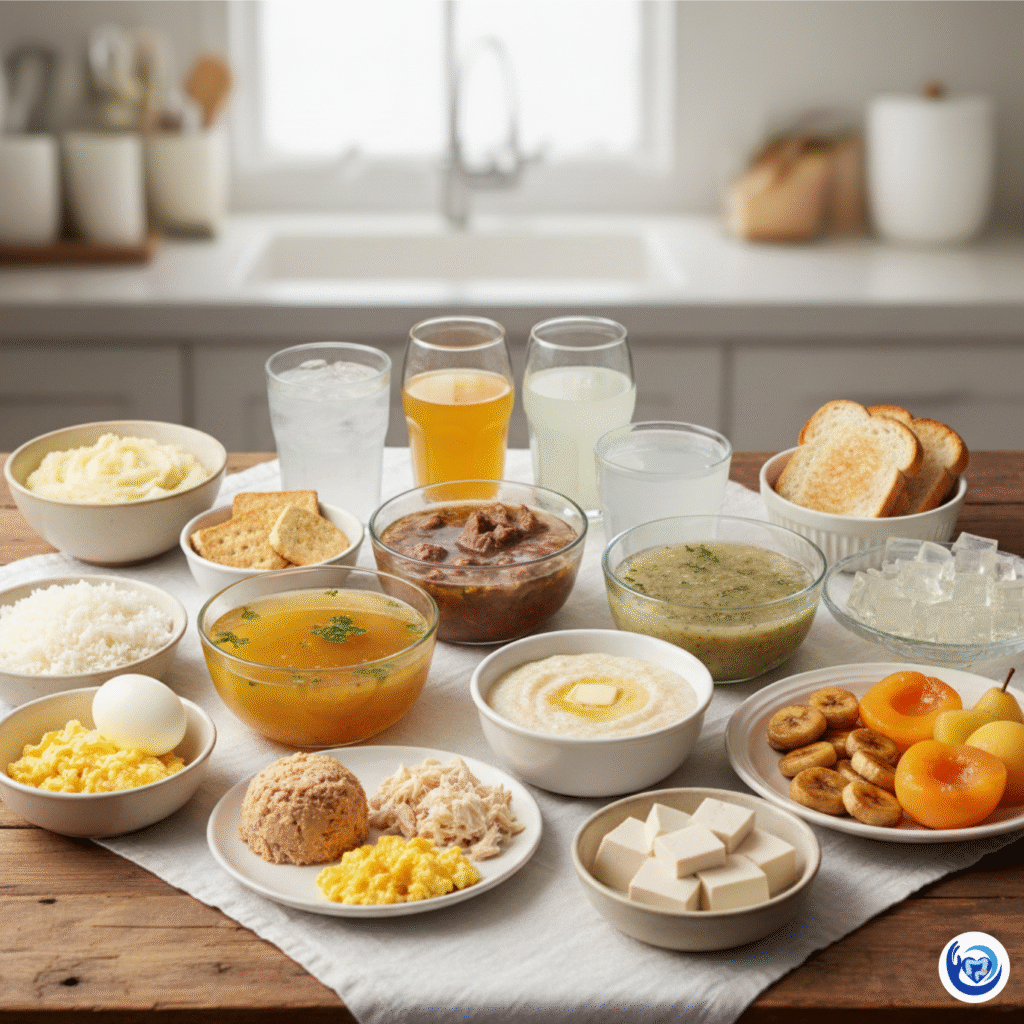
When you feel the first ominous signs of a diverticulitis flare—a dull, persistent ache in your side, nausea, or a sudden change in bowel habits—the clock is ticking. You need to act immediately to rest your colon and prevent the inflammation from escalating. You need your Diverticulitis Kitchen First-Aid Kit
Having a Diverticulitis Kitchen First-Aid Kit ready means you don’t have to scramble or make risky food choices while in pain. These are the essential low-residue foods you must keep stocked to safely transition into the initial healing phase.
The Emergency Stockpile: Diverticulitis Kitchen First-Aid Kit Low Residue Essentials
Low-residue foods are those that are easily and completely digested, leaving minimal “bulk” in the colon, thus reducing pressure.
| Category | Essential Items to Stock | Why They Work |
| Liquids | Clear broths (chicken, beef, vegetable), Sports drinks (clear only), Apple juice/White grape juice, Clear gelatin. | Provides critical hydration and electrolytes without stressing the digestive system. |
| Grains | White rice (instant or regular), White bread, soda crackers (saltine crackers in the US), and Cream of Wheat. | Easily digested carbohydrates provide energy with minimal fibre residue. |
| Protein | Canned tuna/chicken (in water), Eggs (scrambled or boiled), Plain tofu. | Low-fat, easily digestible protein to maintain strength without requiring extensive gut work. |
| Vegetables/Fruit | Canned/cooked bananas, Canned peaches/pears (peeled, no skins), Well-cooked, peeled white potato. | Soft, cooked options remove tough skins and seeds, making them safe fibre sources during transition. |
The Role of Tracking in an Emergency
Your Kitchen First-Aid Kit should be used as soon as your symptom journal shows a potential flare.
- Immediate Log & Action: As soon as you log a pain score of 4/10 or higher that is localised in the lower-left, immediately log your change in diet: “Transitioned to clear liquids/broth only.”
- Track the Response: Track your pain score, temperature, and bowel movements every few hours. This data is crucial for your doctor. If you switch to clear liquids but your pain continues to worsen, you need immediate medical attention.
- Identify Recovery Time: Once the acute pain subsides (your score returns to 0-1/10), your journal tracks how long it took. If it takes five days of liquids to calm down, you have a baseline for future flares.
Your proactive tracking, combined with an emergency food supply, turns a potential crisis into a managed recovery, making the difference between a rough few days at home and a trip to the hospital.
