People often confuse diverticulitis and diverticulosis because the words look and sound nearly identical and refer to two stages of the same physical issue. Some even get them totally confused and create a new word – “diverticulotis“. Sorry to break it to you, but diverticulotis isn’t a condition or even a word. But it’s easy to get confused with all these medical terms, so let’s break it down for you.
The simplest way to remember the difference is to look at the end of the words (the suffixes).
1. The “Suffix” Secret
- Diverticulosis: The suffix -osis in medical terms usually means “a condition” or “state of.”
- Translation: You have the condition of having small pockets (diverticula) in your colon. They are just sitting there, usually causing no problems.
- Diverticulitis: The suffix -itis always means “inflammation” or “infection.”
- Translation: Those pockets have become infected, swollen, and often painful.
2. The “Pothole” Analogy between Diverticulosis and Diverticulitis
Think of your colon (large intestine) like a road.
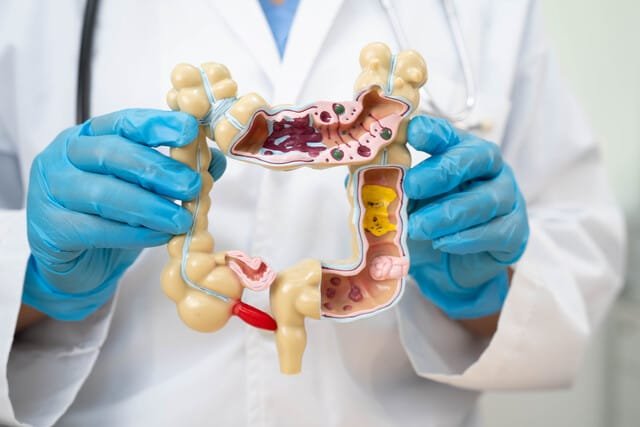
- Diverticulosis is like having potholes in the road. They are there, but as long as you drive over them carefully, you might not even notice them.
- Diverticulitis is what happens when one of those potholes gets filled with rain and debris, causing a flat tyre or a crash. It is the active problem resulting from the potholes.
You cannot have diverticulitis (the infection) without first having diverticulosis (the pockets) (and you can’t get diverticulotis which isnt the right term).
3. Quick Comparison (excluding “diverticulotis” which isn’t a real term)
| Feature | Diverticulosis | Diverticulitis |
| What is it? | Presence of small pouches (diverticula). | Infection/Inflammation of those pouches. |
| Pain Level | Usually none (painless). | Often severe (sharp pain, usually lower left side). |
| Symptoms | Mostly silent; sometimes mild bloating. | Antibiotics, rest, and a liquid diet (urgent care). |
| Treatment | Fever, nausea, chills, and significant pain. | Antibiotics, rest, liquid diet (urgent care). |
4. The “Umbrella” Term
To make matters more confusing, doctors often use the term Diverticular Disease. This is an umbrella term that covers both conditions. If a doctor says you have “diverticular disease,” they are acknowledging that you have the pockets, but they might currently be treating the active infection.
Managing diverticulosis (the “potholes” state) is all about keeping things moving smoothly to prevent waste from getting stuck and causing an infection (diverticulitis).
Remember, if you have heard the term diverticulotis, it isn’t a real term, and you should seek medical advice as it may even be something different to diverticulosis.
5. What Foods to Focus On for Diverticulosis
Here are 5 high-fibre food categories commonly recommended to keep your colon healthy and prevent flare-ups.
Beans and Legumes (The Powerhouses)
These are often the highest source of fibre per serving.
- Examples: Haricot beans (navy beans in the US), kidney beans, chickpeas (garbanzo beans), black beans, and lentils.
- Why: Just one cup of cooked beans can provide 15+ grams of fibre—almost half your daily goal.
Whole Grains (The “Broom”)
Replace “white” carbs (white bread, white rice) with whole grains. They act like a broom, sweeping waste through your intestine.
- Examples: Oatmeal (steel-cut or old-fashioned), brown rice, quinoa, whole-wheat pasta, and bran cereal.
- Tip: Look for the word “Whole” as the very first ingredient on the package.
Fruits with Skins (Nature’s Packaging)
Much of the fibre in fruit is found in the skin, so wash them and eat them whole rather than peeling them.
- Examples: Pears, apples, and plums (all with skin on).
- Berries: Raspberries and blackberries are incredibly high in fibre because of their tiny edible seeds.
Cruciferous Vegetables (The Bulk Builders)
These vegetables add significant bulk to your stool, reducing pressure in the colon.
- Examples: Broccoli, cauliflower, Brussels sprouts, and kale.
- Tip: If these make you gassy, try cooking them thoroughly (steaming or roasting) rather than eating them raw.
Nuts and Seeds (The “Safe” Myth-Busters)
- Examples: Almonds, chia seeds, flaxseeds, and pumpkin seeds.
- Note: In the past, doctors told patients to avoid nuts and seeds, fearing they would get stuck in the pockets. Modern research shows this is false. In fact, their high fibre content actually protects against flare-ups for most people.
⚠️ Crucial Rules for Success
- The “Water” Rule: Fibre acts like a sponge—it needs water to work. If you eat high fibre without drinking enough water, you will get more constipated. Aim for at least eight glasses a day.
- The “Slow” Rule: If your body isn’t used to fibre, add these foods slowly (over a few weeks) to avoid painful gas and bloating.
- The “Flare-Up” Exception: If you currently have pain/fever (Diverticulitis), STOP eating these foods immediately. Switch to a liquid or low-fibre diet (white bread, eggs, broth) until the infection heals.
Keeping Track of Diverticulosis Symptoms
Living with diverticulosis can be like living on a knife-edge – managing it feels like trying to solve a medical mystery. It’s a frustrating cycle: a sudden flare of pain, a scramble for relief, and then the inevitable question—what triggered this? The truth is, no medical test can answer that question for you. One tool can: Your symptom journal. It will become your new best friend in the battle with diverticulitis.
Looking for food Help?
Download our free 1 Day High Fibre Meal Plan to get you started on a healthy diet for managing your diverticulosis.
💧 Critical Reminder: The Water Requirement
With a High-Fibre diet, you must drink water.
- Goal: Drink one full glass of water with every meal and snack listed above.
- Why: Without water, this fibre can harden like cement. Water turns it into a soft gel that moves easily through your colon.
