A Step-by-Step Guide to Reintroducing Foods Safely
You survived the flare. The antibiotics are done, the pain is subsiding, and your colon is tired but healing. Next is the diverticulitis post-flare challenge, which is the transition from a gentle, clear-liquid diet back to a sustainable, high-fibre, preventative one.
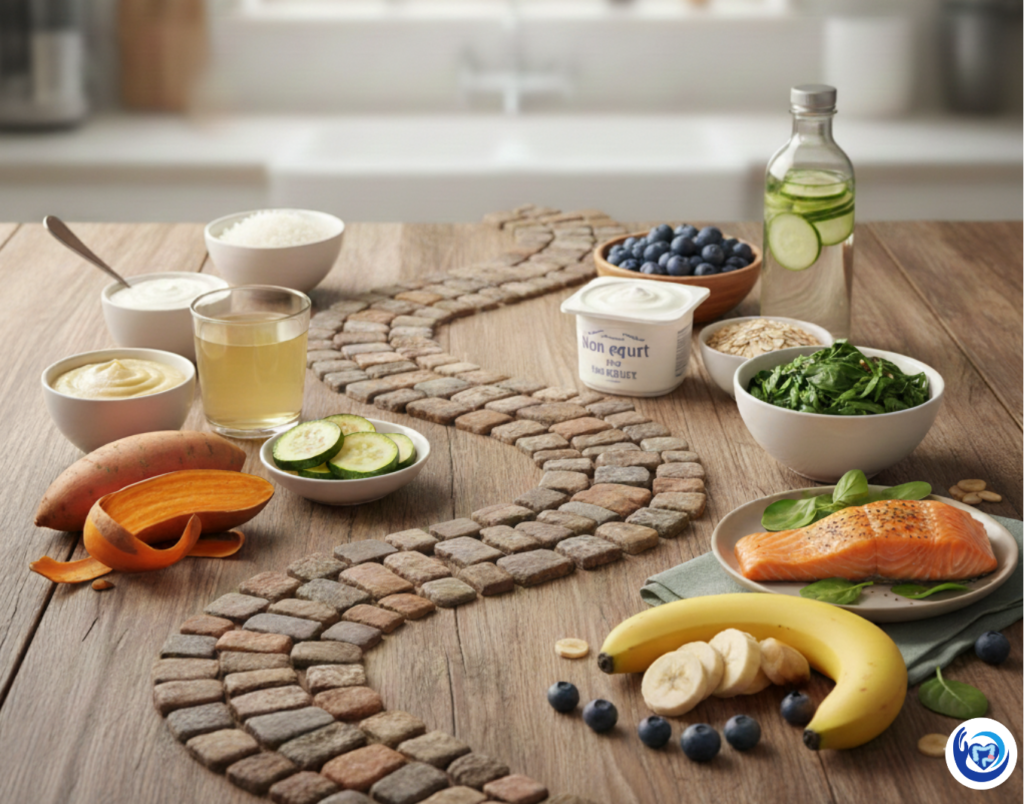
This transition period is when many sufferers make mistakes that lead to an immediate relapse. The key to a successful rebuild is slow, tracked progression. Rapidly introducing high-fibre or difficult-to-digest foods can irritate the recovering colon lining.
Use this guide and your journal to navigate the three phases of recovery safely and track your progress in your Diverticulitis Tracking Journal.
Phase 1: The Liquid & Low-Residue Foundation (Days 1-5, diverticulitis post-flare)
- Goal: Rest the colon completely.
- What to Eat (Track Meticulously): Clear liquids (broths, water, gelatin) followed by very low-residue foods (white rice, white toast, crackers, peeled/seedless white potato).
- Journal Focus: Stool Consistency and Pain Score (0-10). Any return of pain (even a 2/10) means you must pause and revert to the previous level for another day or two.
Phase 2: Gentle fibre Introduction (Days 6-10)
- Goal: Introduce gentle sources of soluble fibre to help solidify stool and support gut flora.
- What to Eat (Introduce Gradually): Add one new item every 48 hours. Start with highly soluble, cooked, and well-blended foods.
- Examples: Well-cooked, peeled vegetables (carrots, sweet potatoes), bananas, canned fruit (peaches, pears, no skins), eggs, and small amounts of lean poultry/fish.
- Journal Focus: New Food Tracked and Reaction Time. If you introduce cooked zucchini on Monday, track your symptoms through Wednesday. Did it cause gas? Bloating? If you have no symptoms, you can try another new food (like peeled apples) on Thursday.
Phase 3: High-fibre for Prevention (Days 11+)
- Goal: Slowly and safely ramp up to your personal goal of 25-35 grams of fibre per day.
- What to Eat (Increase Quantity Slowly): Start bringing in small portions of whole grains, legumes, and raw fruits/vegetables.
- Journal Focus: fibre Tracking (Grams) and Hydration Check. Since fibre needs water to work, you must track your daily fibre grams and water intake side-by-side. If you increase your fibre from 15g to 20g, are you also increasing your water intake? If not, you risk hard stool and a potential relapse.
The Power of the Pause Button in the diverticulitis post-flare recovery
Your Diverticulitis Tracking Journal is your Pause Button. If you introduce a new food (even a ‘safe’ one like whole-wheat bread) and immediately experience gas, bloating, or tenderness, your journal should reflect that.
Action: Note the food, revert to the previous successful phase for 24-48 hours, and try again a few days later. If the reaction happens again, you’ve identified a temporary or permanent trigger.
Don’t rush the rebuild. A slow, tracked progression is the best way to move from crisis management to long-term health.
