
Understanding the Digestive Puzzle
If you’ve ever dealt with persistent stomach trouble, you know how confusing—and frustrating—it can be. Conditions like Irritable Bowel Syndrome (IBS), Diverticulitis, and Crohn’s disease all affect the digestive system and share some overlapping symptoms, making it difficult to figure out what’s really going on. But how can you distinguish between IBS versus Diverticulitis, and Crohn’s Disease
Understanding the fundamental differences of IBS versus Diverticulitis and Crohn’s is key. Here is a breakdown of IBS and how to distinguish it from its often more serious counterparts.
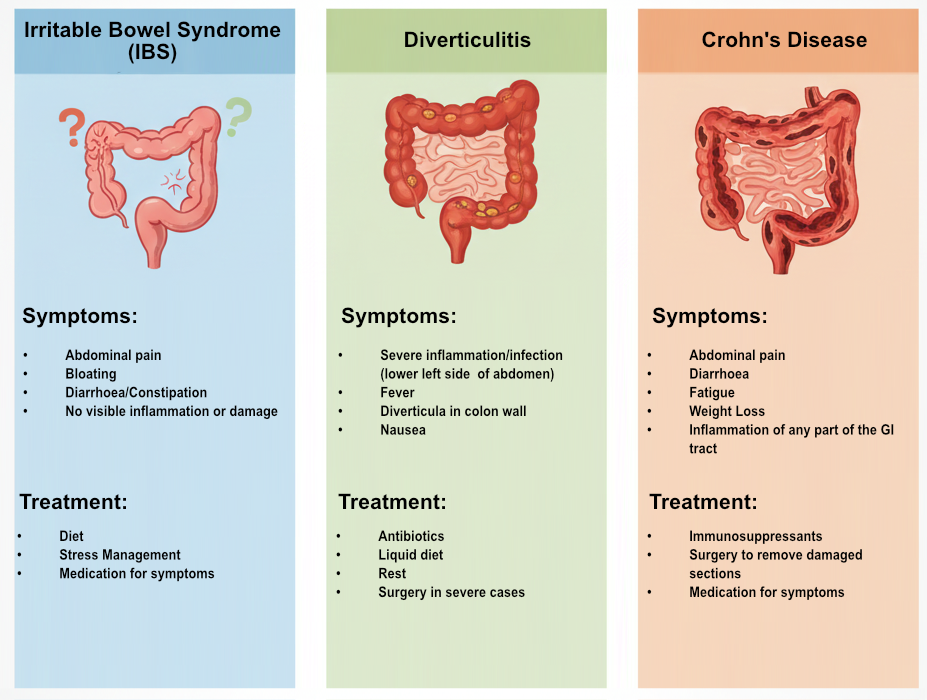
What Exactly is Irritable Bowel Syndrome (IBS)?
IBS is one of the most common gastrointestinal disorders, often referred to as a Disorder of Gut-Brain Interaction. This means there is an issue with how your brain and gut work together, leading to increased sensitivity and changes in the way your bowel muscles contract.
The Key Distinction: IBS is considered a functional disorder. This is the most crucial point: when a doctor performs diagnostic tests like a colonoscopy, they will see no visible signs of inflammation or damage to the digestive tract in IBS versus diverticulitis. The symptoms are caused by a functional problem, not a structural one.
Common Symptoms:
- Abdominal pain or discomfort that is often relieved by having a bowel movement.
- Bloating, gas, and abdominal distension.
- A change in bowel habits, which can be:
- Diarrhoea-predominant (IBS-D)
- Constipation-predominant (IBS-C)
- Mixed (IBS-M), with alternating bouts of both.
IBS is a chronic, lifelong condition, but it is not life-threatening and does not lead to other serious diseases like cancer.
🔍 Identifying the Difference: IBS versus Diverticulitis vs. Crohn’s Disease
While all three conditions can cause abdominal pain and changes in bowel movements, they differ significantly in their underlying cause, physical impact, and severity.
1. Diverticulitis
Diverticulitis is a structural disease characterised by small, bulging pouches called diverticula that can form in the colon.
| What Is It? | Inflammation or infection of the diverticula (pouches) in the colon wall. |
| Type | A structural condition (physical change is visible). |
| Key Symptoms | Severe, often sudden abdominal pain and tenderness, usually in the lower left side. Fever, nausea, and chills are common. |
| Structural Clues | Diagnostic imaging (like CT scans) or a colonoscopy will clearly show the inflamed pouches. |
| Severity | It can lead to serious complications, including abscesses, intestinal bleeding, or bowel perforation (a hole in the bowel). |
2. Crohn’s Disease
Crohn’s disease is a type of Inflammatory Bowel Disease (IBD), a group of chronic conditions that cause destructive inflammation.
| What Is It? | Chronic, ongoing inflammation of the digestive tract, which can affect any part from the mouth to the anus, but commonly affects the end of the small intestine. |
| Type | A structural/inflammatory disease. |
| Key Symptoms | Chronic diarrhoea and abdominal pain, often accompanied by “red flags” that are not typical of IBS, such as bloody stools, fever, and unexplained weight loss. |
| Structural Clues | A colonoscopy or other imaging will reveal ulcers, inflammation, and structural damage (like narrowing or thickening) in the intestinal wall. Blood tests often show signs of inflammation. |
| Severity | Chronic diarrhoea and abdominal pain, often accompanied by “red flags” that are not typical of IBS, such as Bloody stools, fever, and unexplained weight loss. |
The Crucial Takeaway: Inflammation vs. Function
The single most important factor differentiating these conditions is inflammation and structural damage:
| Condition | Cause of Symptoms | Visible Damage on Testing? |
|---|---|---|
| IBS | Disorder of gut-brain interaction (functional problem) | NO |
| Diverticulitis | Inflammation/infection of diverticula (structural problem) | YES |
| Crohn’s Disease | Chronic, destructive inflammation (structural/inflammatory problem) | YES |
When to See a Doctor
While IBS is very common, certain symptoms are Red Flags that suggest you may have a structural condition like IBD or diverticulitis. If you experience any of the following, seek medical attention immediately:
- Blood in your stool.
- Unexplained weight loss.
- Fever or night sweats.
- Severe pain, doesn’t come and go, or wakes you from sleep.
- Onset of symptoms after age 50.
Only a qualified healthcare provider can give you an accurate diagnosis through a combination of reviewing your symptoms and conducting tests to rule out structural conditions. If you are struggling with persistent digestive issues, the first step is always to consult a doctor.
Living with any bowel disorder can be like living on a knife-edge – managing it feels like trying to solve a medical mystery. It’s a frustrating cycle: a sudden flare of pain, a scramble for relief, and then the inevitable question—what triggered this? The truth is, no medical test can answer that question for you. One tool can: Your symptom journal. It will become your new best friend in the battle with diverticulitis.
